

Smart Home Wiring Requirements in Auckland (2026 Guide)
Need an emergency residential electrician at 3 am, or are you already deep into a home renovation and wondering why your new smart switches won’t work? Most homes built before the 1990s weren’t wired with smart technology in mind, which catches out homeowners and builders alike once the switch plates come off.
We walk through exactly what smart home wiring requirements Auckland properties need, including the neutral wire question that trips up most DIY attempts, how PDL Iconic smart switches install into existing boxes, and what retrofitting looks like for older villas.
What Does “Smart Home Wiring” Actually Cover?
Smart home wiring covers three things: the switches and dimmers controlling your lights, the sensors and hubs that tie devices together, and for anyone building new, the structured cabling that gives everything a stable backbone.
For most Auckland homeowners retrofitting an existing property, the first two matter most. Builders and developers working on new builds have the luxury of planning all three in before the walls go up.
Do Smart Switches Need a Neutral Wire in Auckland Homes?
Yes, most smart light switches need a neutral wire to work, and it’s the number one reason DIY installs stall halfway through.
A neutral wire completes the electrical circuit and gives a switch a constant, low-level power draw so its internal electronics, Bluetooth, or Wi-Fi chip stay powered even when the light’s switched off. Standard mechanical switches don’t need this, which is why plenty of Auckland homes built before the 1980s were never wired with a neutral running to the switch plate.
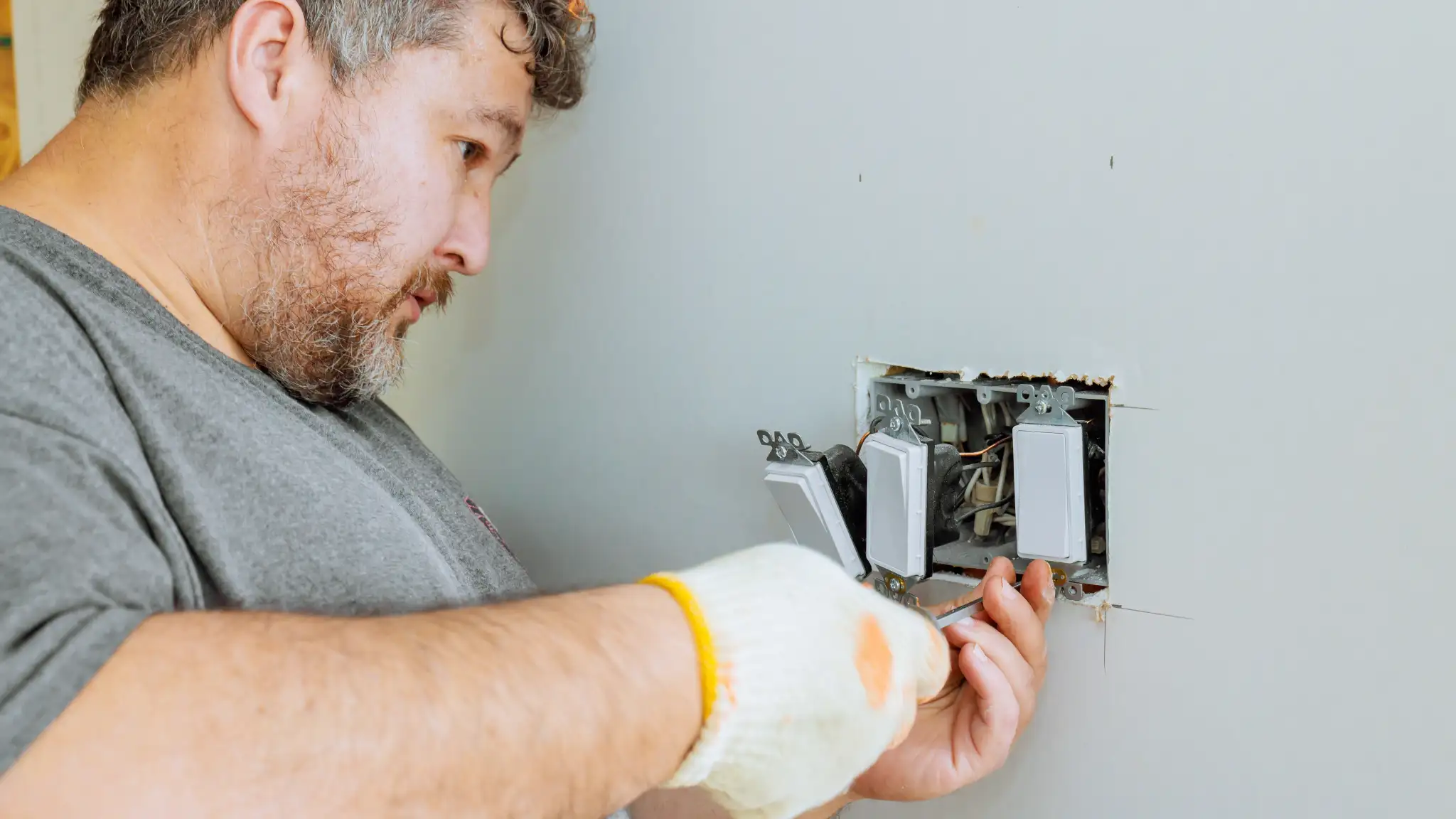
If you open up a switch and find only two wires instead of three, that’s usually your answer. At this point, you can either run a new neutral wire back to the switch or fit a no-neutral compatible switch or a micro module tucked behind the existing plate that draws power differently.
Instead of guessing on your own and buying random switches online, it takes five minutes for a registered electrician to open the plate and advise you on your next move.
What Does PDL Iconic Smart Switch Installation in NZ Cover?
With PDL’s Iconic Wiser range, the switches are built to sit in standard flush boxes and brackets already in New Zealand walls, so in most rooms it’s a genuine swap rather than a full box replacement.
The range gives you a choice of Bluetooth or Zigbee connectivity, depending on the hub or app ecosystem you’re running, with options ranging from a straightforward on/off switch to dimmers and scheduled outlets. A typical single-room install takes under an hour once the wiring’s confirmed; a whole-house upgrade across ten to fifteen switches is usually a one-day job.
The switch itself looks like a simple swap, but it’s still mains wiring behind a live switch plate. PDL Iconic Smart Switch installation in NZ needs to go through a registered electrician, both for your safety and to keep the work compliant if you ever sell the property.
Retrofitting Home Automation Into Existing Wiring
Most Auckland homes can be retrofitted for home automation without tearing into walls.
Where running new cable isn’t practical, wireless and mesh-based devices sitting on your existing circuits do the job just as well, particularly for lighting and simple automation. If you want new cabling for a dedicated smart hub location or additional data points, an electrician can usually fish new cable through existing wall and ceiling cavities with minimal patching.
However, check your consumer board’s capacity before adding multiple smart circuits or a hub, especially if you’re also planning bigger power draws like EV charger installation down the track.
New Build or Renovation? Plan Smart Wiring Before the Walls Close
If you’re a builder or developer with a new build underway, this is the one section worth flagging to your electrician early. Running neutral wires to every switch location, laying in extra data points, and positioning a hub cupboard all cost next to nothing extra when they’re part of the first fix wiring. Leave it until after the walls are lined and you’re paying for access, not materials. The same logic applies to a full renovation where walls are already coming out.
If there’s a chance the next owner or your future self will want smart switches, sensors, or a security system, it’s far cheaper to wire for it now than retrofitting home automation to existing wiring later on.
Why You Need a Registered Electrician in NZ
Any work involving mains wiring falls under New Zealand’s electrical safety rules, primarily AS/NZS 3000. This includes fitting a smart switch, which needs to be done or signed off by a registered electrician, with a Certificate of Compliance issued for the job.
Hall Electrical’s team holds Master Electricians membership, which means that our work is both compliant on paper and held to an industry standard above the legal minimum. Skipping this step could cause insurance and resale problems down the line, in addition to a voided warranty.
Get Your Wiring Checked Today
If you’re planning smart switches, a full automation setup, or just want to know what your current wiring can support, our team can tell you in one visit. Contact Hall Electrical, and we’ll assess your switch boxes, your switchboard capacity, and what PDL Iconic setup makes sense for your home, backed by 45 years of getting Auckland’s wiring right the first time.