

A Short Guide to Fixing and Replacing Faulty Motion Sensor Lights
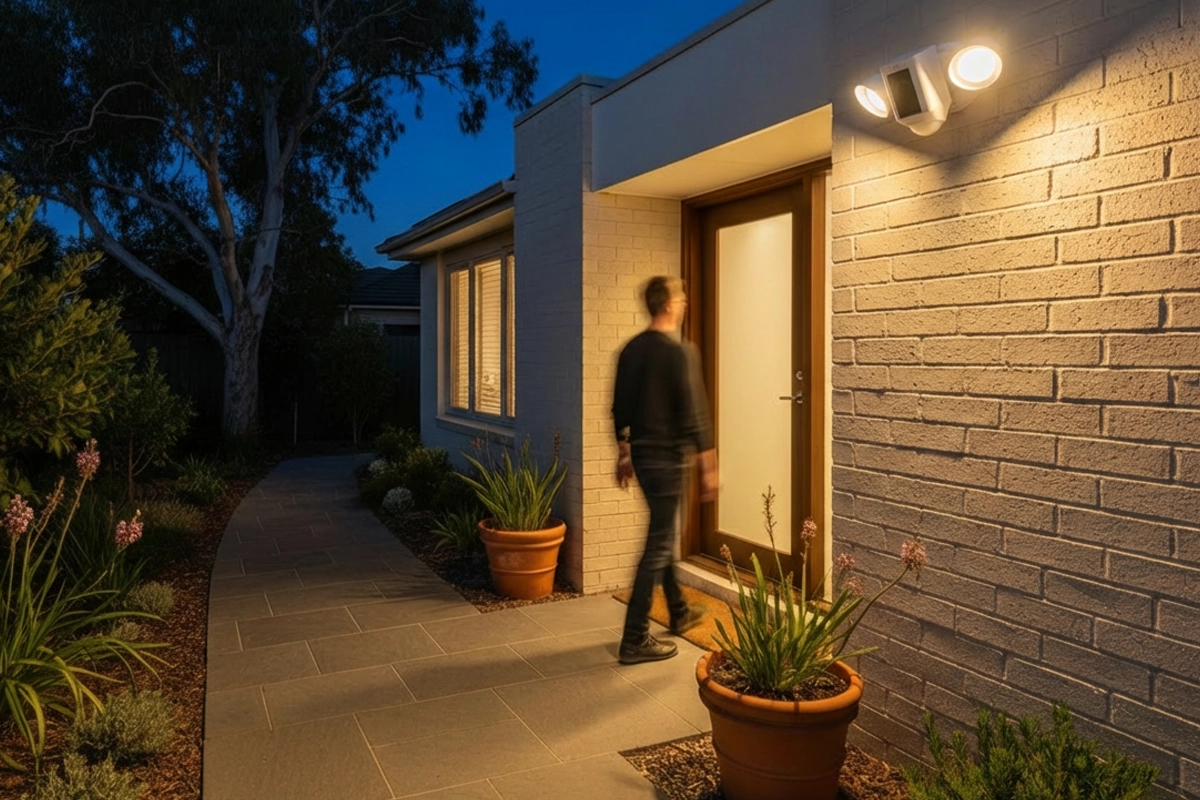
Outdoor sensor lights improve home safety, support safer movement at night, and help manage power use around key outdoor areas. A quick light response can alert residents, guide visitors, and reduce dark spots near doors and walkways. Correct placement and proper setup ensure the lighting responds only when movement occurs.
Small issues can develop over time and reduce overall performance. In this guide, clear steps explain how to spot faults, apply simple fixes, and decide when replacement makes more sense. Practical knowledge helps homeowners keep outdoor lighting reliable and effective for everyday use.
Common Motion Detector Light Problems
Motion detector lights turn on when movement appears around your home. Below are the most common problems that stop them from working properly.
Lights That Will Not Turn On
Lights that fail to turn on often relate to power supply faults or failed components. Blocked or misaligned sensors can also prevent proper activation. Checking power flow and sensor condition helps identify the cause.
-
-
- Worn bulbs
- Tripped circuit breakers or loose wiring
- Dirty or obstructed sensor lenses
-
Lights That Stay On Without Motion
Lights that stay on without any movement often point to sensitivity or placement issues. Heat sources or nearby activity can confuse the sensor and keep the light active. Adjusting the angle or lowering the sensitivity usually fixes the problem.
-
-
- Sensitivity set too high
- Nearby heat from vents or vehicles
- Incorrect sensor angle or range
-
Light Duration That Feels Too Short Or Too Long
Incorrect timer settings can make lights switch off too fast or stay on longer than needed. Power cuts may reset the timer and affect how it works. Wear inside the unit can also reduce timing accuracy over time.
-
-
- Timer dial incorrectly adjusted
- Power interruptions affecting calibration
- Age-related wear inside the unit
-
Sensors That Fail To Detect Movement
Sensors may stop detecting movement when dirt blocks the lens or internal parts wear out. Poor placement can also limit the detection range and reduce coverage. Regular cleaning and correct positioning help prevent this problem.
-
-
- Dirt, dust, or debris on the sensor
- Sensor positioned too high or too low
- Internal sensor damage
-
Troubleshooting A Faulty Light Sensor
Problems with outdoor light sensors often start small and go unnoticed at first. Simple checks can help restore normal operation before the issue gets worse.
How To Troubleshoot?
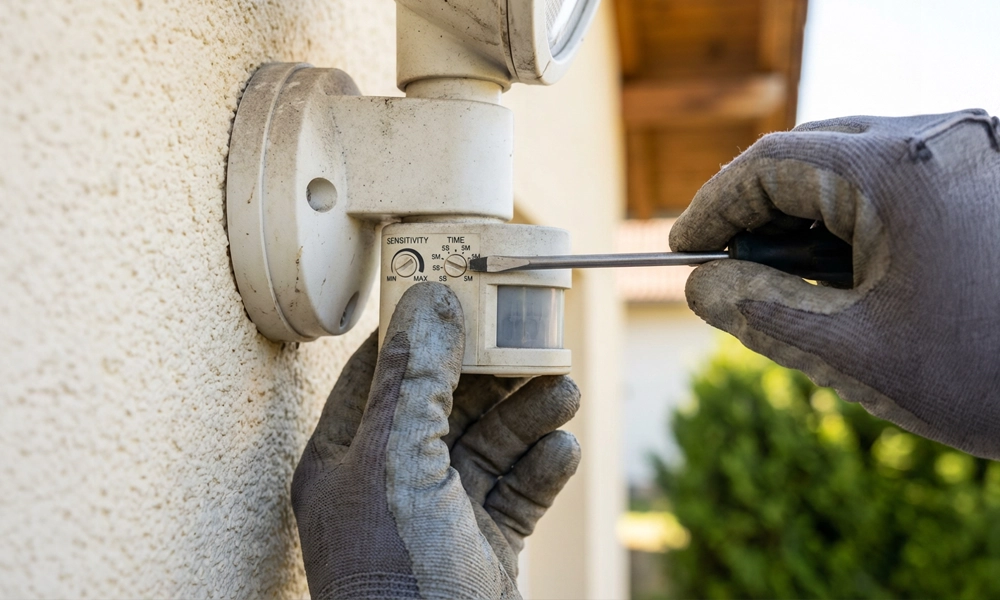 Before applying fixes, identify where the issue begins to avoid guesswork. Careful checks and step-by-step testing help improve accuracy and limit unnecessary changes.
-
-
- Visual Inspection: Check the sensor face and the nearby area during daylight for dirt or blockages. Wipe the surface gently with a soft cloth to clear the detection area. Test the light by walking through the coverage zone from different directions.
- Sensitivity Adjustment: Control dials are usually located under the sensor and allow changes to sensitivity, timing, and range. Reducing sensitivity can limit false activation, while extending the timer helps prevent the light from switching off too quickly. Adjust one setting at a time and test the results to improve accuracy.
- Power Reset: Turning the power off at the mains for a short time can reset internal settings. Switching it back on may correct minor calibration issues. A basic power cycle often improves inconsistent operation.
- Check Power Source: Wiring connections should remain secure and free from corrosion. Loose or damaged wires can cause the light to turn on and off without warning. An electrician can help if the wiring appears worn or unsafe. If the fitting shows signs of damage, moisture ingress, or exposed wiring, it’s best to stop troubleshooting and have it checked by a qualified electrician.
- Environmental Interference: Heat from vents, car movement, or swaying plants can disrupt sensor accuracy. Adjusting the sensor angle helps reduce unwanted activation. Keeping the surrounding area clear supports steady performance.
-
DIY Fixes
Basic fixes often resolve common issues without special tools or technical skills. Replacing worn parts helps restore proper operation and reduces stress on internal components.
-
-
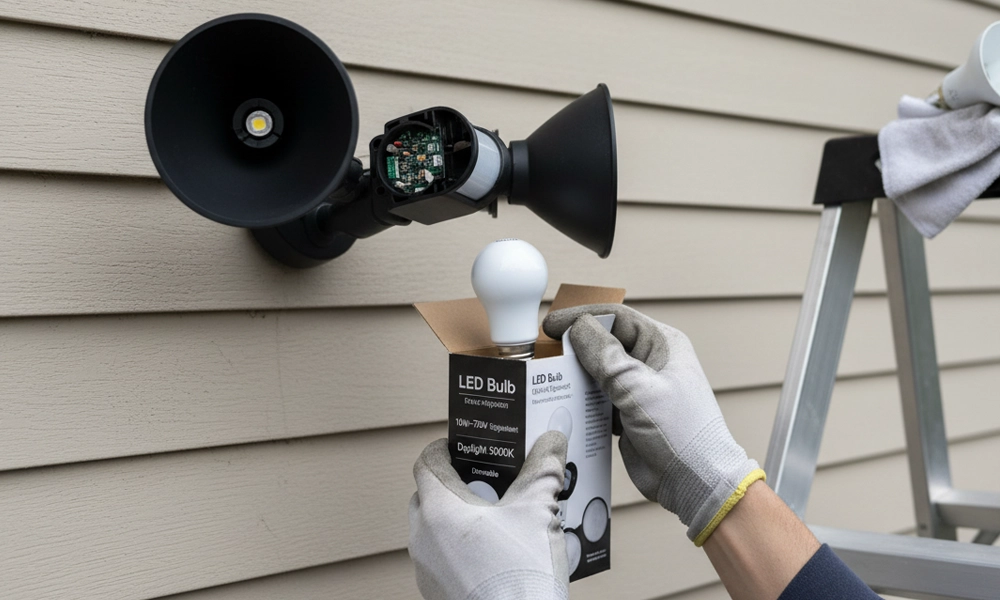
- Bulb Replacement: Dimming or flickering lights often point to bulb wear. Using the correct bulb type helps prevent overheating and extends the life of the fitting.
.
- Bulb Replacement: Dimming or flickering lights often point to bulb wear. Using the correct bulb type helps prevent overheating and extends the life of the fitting.
-
Choose From A Variety Of Outdoor Light Sensors
 Outdoor sensor lights are available in different styles and formats to suit various home layouts and outdoor spaces. Brand choice often affects reliability, ease of setup, and long-term performance.
1. Simx
Simx is a staple in the New Zealand market, known for providing robust lighting solutions specifically designed for local conditions. Their sensors are engineered for high-performance switching and are often the go-to for residential security due to their longevity.
The range includes everything from discrete PIR (Passive Infrared) sensors to heavy-duty floodlights. Simx products are favoured for their ease of installation and clear adjustment dials, making them a reliable choice for driveways and high-traffic entry points. Their focus on weather-tight seals ensures the internal electronics remain protected against coastal salt and heavy rain.
2. Steinel
Steinel is widely considered the global leader in sensor technology, offering German-engineered precision that is difficult to beat. They pioneered many of the high-frequency and infrared technologies used in modern sensors today, focusing on “intelligent” light that only activates when truly necessary.
Steinel sensors are ideal for homeowners who want surgical precision in their detection zones to avoid false triggers from pets or swaying trees. Their high-end models feature multi-lens systems that provide 360° coverage without “blind spots.” If you are looking for a “set and forget” system with premium build quality, Steinel is the top-tier recommendation.
3. Philips
Philips combines world-class LED efficiency with user-friendly sensor integration. Their outdoor range focuses heavily on energy savings and light quality, ensuring that when the sensor triggers, the illumination is bright, steady, and visually comfortable without harsh glare.
The brand is particularly well-suited for modern homes where aesthetics are as important as function. Philips sensors often feature sleek, contemporary designs that blend into architectural lines. Furthermore, their LED-integrated units have an exceptional service life, reducing the need for bulb replacements and offering a low total cost of ownership over the life of the fitting.
How To Maintain An Outdoor Light Sensor
Regular care helps outdoor sensor lights stay accurate and reliable over time. Simple upkeep reduces wear and keeps the lighting responsive during night use.
-
-
- Wipe the sensor surface with a dry cloth to remove dirt and insects.
- Check the fitting position to confirm the detection area still points where needed.
- Replace bulbs early to maintain steady light output and protect internal components.
- Test the light after heavy weather or seasonal changes.
- Adjust sensitivity and timer settings to match current daylight hours.
- Tighten screws and brackets to prevent movement caused by wind.
-
Keeping Outdoor Sensor Lighting Reliable
Motion sensor lights support safety, visibility, and controlled energy use around a property. Spotting issues early and applying basic fixes can extend the lifespan of outdoor lighting and limit unnecessary replacements. Reliable performance depends on proper installation, regular checks, and selecting well-built products.
When faults persist or upgrades become necessary, selecting dependable fittings is important. Hall Electrical offers a wide range of outdoor sensor lights and accessories suited to different environments and budgets. With the right products and guidance, outdoor lighting can remain effective and reliable for years.
Motion Sensor Light FAQs
These questions cover common concerns homeowners face with outdoor sensor lighting. Clear answers help identify issues and guide the next steps.
1. Why is my motion sensor light not working at night?
Most sensor issues are due to a worn sensor, though wiring faults, failed lamps, incorrect or sensitivity settings can also stop nighttime operation.
2. What should I check if my sensor light isn’t working?
Start by turning the sensor off and back on. If issues persist, replace bulbs if possible (LEDs don’t have replaceable bulbs) and check control settings. Dirt on the sensor lens, nearby heat sources, or contact movement may interfere with detection.
3. Do motion sensors wear out over time?
Yes, sensor components can degrade after years of outdoor exposure and switching cycles. Failure often shows as late triggering, false triggers, or no response.
4. Can an electrician repair a motion sensor light, or does it need replacing?
Yes, an electrician can repair a motion sensor light when the issue is related to wiring. If the sensor unit has failed or the light is unsafe, replacement is usually the best option.
An electrician is required to replace a sensor, as you are required to provide an ESC (Electrical Safety Certificate).